During the month of June, you are encouraged to take opportunities to learn more about First Nations history and culture. There are many wonderful and enriching occasions to help support your journey of becoming better allies. Over the next few weeks, we will be highlighting information on upcoming Pow Wows and events in our region. Pow Wows are cultural celebrations of pride and gratitude and an opportunity to discover the rich traditions and cultural heritage of Indigenous Peoples.

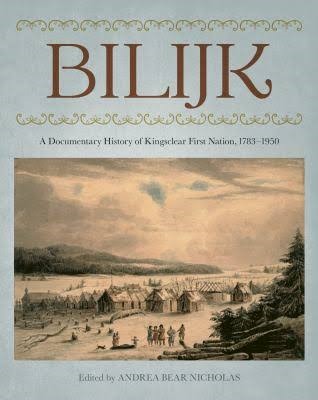
Historian, author and Professor Emeritus from St. Thomas University Andrea Bear Nicholas recently completed the book ‘Bilijk’ a documentary history of Kingsclear First Nation from 1783-1950 which includes Oral Traditions, archival documents, paintings, maps and photographs which documents the history of Bilijk, the first Welastekwey community to be established as a reserve. Click on the link that follows and listen to an audio clip of a CBC interview with Andrea Bear Nicholas as she speaks on her journey on the completion of her new book.
Click here https://www.cbc.ca/player/play/audio/9.7146872

This event is being held on July 1st, Waterford Green, Chatham. A Sunrise Ceremony will be held at 6:30am in honor of Dalton “Doc” Francis, who was a key member of the team since its inception.
The event will feature Xavier Burnsed of Gesgapegiag and Shay Ward of Natoaganeg, as head dancers for this year’s event. More information to come on the schedule of events.


Follow the beat of the drum to the end of Hiawatha Avenue, Oromocto First Nations. The PowWow is scheduled for July 10th to 12th. There will be over 50 vendors. Invited drums include: Smokey Point, Amu Singers, Stoney Bear and Wabanaki Confederacy. Host Drum will be Muskrat Chanters and Co-Host Drum Sipu Boyz. The event also includes Community Head Dances, Dakota Verner and Chace Green and Junior Female Head Dancer (Jingle Dance) Ellie Bourque and Junior Male Head Dancer (Grass Dancer) Graydon Craig. Grand Entry is scheduled on Saturday and Sunday at 1pm. All are welcome!
- Letter from Bishop Riesbeck (pdf, 118kB)
- The Report (pdf, 1,018 kB)
This weekend of January 25 & 26, the Diocese will be taking up a special collection for the Indigenous Reconciliation Fund. The fund was established to accept donations from 73 Catholic Dioceses across Canada, fulfilling the $30 million financial commitment made by Canada’s Bishops in September 2021. As of January 1, 2025, the Board has approved 216 projects from across Canada, including nine from our Diocese.
Special Collection envelopes are included in your parish boxed sets and at the church entrances. You may also contribute on the Diocesan website (https://dioceseofsaintjohn.org/donations). On the form be sure to select that your donation be directed to the Indigenous Fund.
Please consult the diocesan website for additional resources https://dioceseofsaintjohn.org/indigenous-relations

The Jesuit Forum brings small groups together to reflect, share, and speak openly to help discern pathways to a more socially just and spiritually fulfilling world. The April 2024 issue, entitled “Discerning…The Confession of Genocide for Truth and Reconciliation”, is being provided as another opportunity to learn and educate us on our journey to becoming better allies.

As noted on the Truth and Reconciliation website: “for Indigenous and non-indigenous peoples to coexist peacefully, a relationship must be built on understanding and respect. That understanding can be a first step to better relations on a range of issues including environmental, spiritual, societal, and justice matters.”
The link below provided by the WNNB is a great resource on what it means to become an ally and how we can best accomplish this as individuals and within our Parish. Woliwon- Thank you.
https://wnnb.wolastoqey.ca/resources/


The entrance is situated in the Fredericton Botanic Garden (Prospect Street entrance). The Healing Garden is the brainchild of Cecelia Brooks, a Knowledge Keeper from St. Mary’s First Nation, and her son, Anthony Brooks. "One of the things that Anthony and I talked about was the reconciliation process here in Canada, and that we truly believe that it's the grassroots people that will initiate that and carry that," said Cecelia Brooks. “Since time immemorial the Wabanaki People have lived in gratitude and nurtured reciprocity with plants and all other beings on this earth we know to be our mother. Sharing this harmonious approach to life and living beings is reflected in the Wabanaki worldview through our ancient languages, culture, dance, and song. The garden is an expression of our love and hope for the healing and nurturing of the earth and all her people.” For more information on the Healing Garden and guided tours click on the following link: https://www.wabanakitreespirit.ca
In this section, learn about Indigenous Knowledge on solar eclipses!
Content from https://www.discovertheuniverse.ca/eclipse.
Narratives of the YouTube Video:
Total Eclipse Story, by Samantha Doxtator
Mohawk, English, French
The Hiawatha Wampum and a Solar Eclipse, by Melanie Demers
Mohawk, English, French
Tshakapesh Traps the Sun, by Laurie Rousseau-Nepton
Mikmaq, English, French

Glory Happening is a book of stories and prayers that remind you to take a closer look at your everyday circumstances. It is an invitation to live deeply into every moment with the expectation that something good will find you at the end of the day.

A Mi’kmaq elder, author, columnist and human rights activist wrote the history of Indigenous people of Atlantic Canada from a factual, historical, Indigenous perspective. Since the first edition was published in 1993, Daniel Paul’s ongoing research confronts the mainstream record of Canadian settler colonialism and reveals that the mistreatment of Indigenous Peoples is not confined to the past.

Rita Joe was a famous Mi’kmaq poet who celebrated her language, culture, and way of life. Born in Whycocomagh, Nova Scotia and orphaned at the age of ten. The poem tells her childhood story of losing her language while in the Shubenacadie Residential School. Her powerful words explore and celebrate the survival of Mi’kmaq culture and language despite the attempts to eradicate it. Upon her death in 2007, the Globe and Mail named her the Poet Laureate of the Mi’kmaq people. “I was only a housewife with a dream to bring laughter to the sad eyes of my people.”

Braiding Sweetgrass: Indigenous Wisdom, Scientific Knowledge, and the Teachings of Plants is a 2013 nonfiction book by Potawatomi professor Robin Wall Kimmerer, about the role of Indigenous knowledge as an alternative or complementary approach to Western mainstream scientific methodologies.
Braiding Sweetgrass explores reciprocal relationships between humans and the land, with a focus on the role of plants and botany in both Native American and Western traditions. The book received largely positive reviews, appearing on several bestseller lists. Kimmerer is known for her scholarship on traditional ecological knowledge, ethnobotany, and moss ecology.

Isabelle Knockwood is an elder of the Mi’Kmaq Nation, author, and survivor of the Shubenacadie Residential School. She attended St. Mary’s University and in 2013, was awarded an Honorary Doctor of Civil Law by Saint Mary’s University. Her booked is dedicated to all former students of the Indian Residential School in Shubenacadie, Nova Scotia.

In addition to being an author, Bob Joseph is founder of Indigenous Corporate Training Inc., a Master Trainer on Indigenous relations, manages a blog called Working Effectively with Indigenous Peoples, is a member of the Gwawaenuk Nation and is the son of a hereditary chief.

Historian, author and Professor Emeritus from St. Thomas University Andrea Bear Nicholas recently completed the book ‘Bilijk’ a documentary history of Kingsclear First Nation from 1783-1950 which includes Oral Traditions, archival documents, paintings, maps and photographs which documents the history of Bilijk, the first Welastekwey community to be established as a reserve.